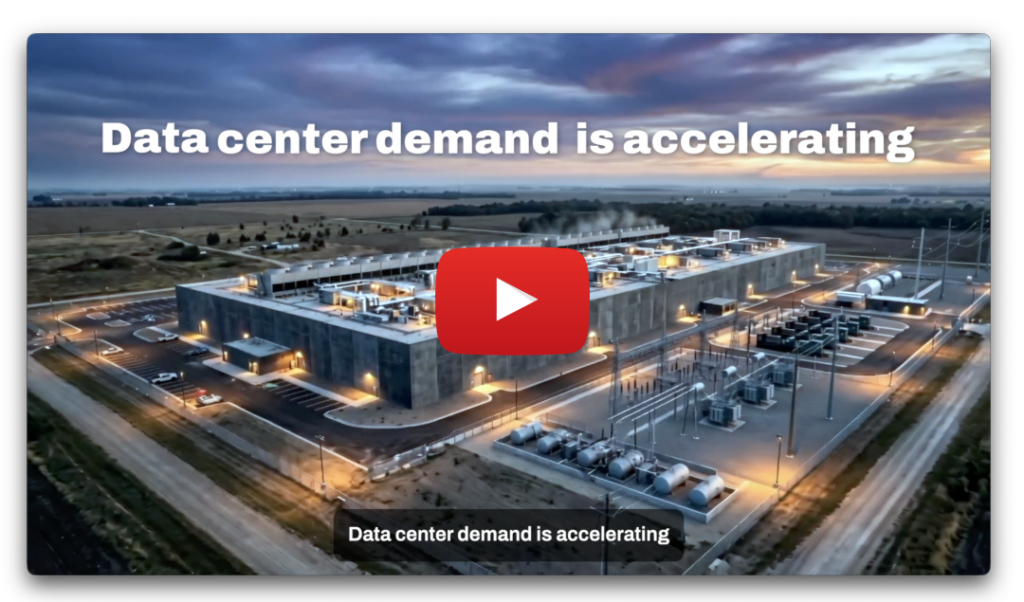
Data center demand is accelerating as AI adoption, cloud computing, and digital infrastructure investment drive the need for new capacity. Global data center demand could nearly triple by 2030, growing from roughly 82 gigawatts (GW) in 2025 to about 220 GW by the end of the decade. ¹
Owners, developers, contractors, and project teams are being asked to move faster while managing increasingly complex design requirements, compressed schedules, rising costs, and enormous amounts of project information. Delays during design, construction, or commissioning can have significant downstream consequences for delivery and time to value.
The challenge is not simply building faster. It is making better decisions earlier, maintaining visibility as work moves into the field, and carrying what an organization learns from one project into the next. That requires a more connected approach to data center construction, one that links design, field activity, project controls, and institutional knowledge across the project lifecycle.
Faster data center delivery starts before construction begins
Many of the decisions that influence construction speed are made well before crews arrive on site. Data center teams may need to evaluate property boundaries, site constraints, power capacity, utility infrastructure, tenant technology, and much more before a project can confidently move forward.
When these evaluations depend heavily on manual processes, each new site can require teams to repeat significant amounts of work. A more scalable approach is to codify design logic, engineering standards, and project requirements into configurable workflows that allow teams to test alternatives earlier.
For example, teams can evaluate how changing a site constraint affects buildable area, how different campus layouts influence capacity, or how standardized buildings and infrastructure can be adapted to a new location. The objective is not simply to generate drawings faster. It is to evaluate more possibilities earlier, understand tradeoffs, and move into later design stages with greater confidence.
Slate Generate supports this approach by turning an organization’s design standards, engineering logic, and repeatable processes into configurable workflows that can be applied across projects. For data center organizations managing large development pipelines, that ability to repeat proven processes while adapting them to each site can become increasingly valuable as programs scale.
Repeatable programs should get smarter with every build
Many data center organizations do not deliver a single isolated project. They are building campuses, expanding portfolios, and entering new markets in parallel. This creates an opportunity traditional project delivery methods fail to fully capture: every completed project should make the next one easier to deliver.
Projects generate valuable information about what caused delays, where coordination broke down, which design decisions created downstream problems, and which mitigation strategies worked. But that knowledge often remains buried in documents, individual teams, and lessons-learned sessions.
Organizations need to identify recurring issues and root causes, determine which lessons are relevant to future projects, and make those insights accessible when new decisions are being made. Slate Project Intelligence can help consolidate recurring project issues, historical insights, risk patterns, and potential mitigation actions into institutional knowledge that can be applied across a portfolio.
Learning from a project is useful. Embedding those lessons into how the next project is designed and delivered is where repeatability becomes scalable. For data center programs, repeatability should mean more than reusing the same template. It should mean applying what the organization has learned so each new project can be delivered with better information, stronger standards, and less reinvention.
Real progress visibility requires more than another status report
Once construction begins, a different challenge emerges. Data center projects generate enormous amounts of field information, including daily reports, schedule updates, model data, completed work, RFIs, and other project signals.
The problem is that these sources do not always move at the same speed. A field activity may be completed today, documented later, incorporated into a report after that, and reviewed by project leadership during a future status meeting. The result can be a gap between what is happening in the field and what the broader project team understands about project status.
Compressed schedules and tightly coordinated systems can make it harder to recognize problems early. More effective progress tracking connects field activity directly to the project plan. Instead of reconstructing status after the fact, teams can connect completed work, schedule activities, models, and field reporting into a shared view of project progress.
Slate Progress supports this approach by connecting schedule activities, model information, and field reporting into a shared view of project progress based on information coming directly from construction activity. This reduces the distance between what is happening in the field and what project teams know about it.
Data center risk management needs to become more proactive
Progress visibility helps teams understand where a project stands. The next challenge is understanding where it may be headed.
Traditional project controls often do a good job of documenting what has already happened. But on complex data center projects, teams also need to recognize emerging conditions early enough to change the outcome.
We should be asking more useful questions of project data: What is beginning to happen? What evidence supports it? What parts of the project could it affect? How quickly could that impact occur? What action could reduce the risk?
A connected construction intelligence approach can bring together signals from schedules, RFIs, drawing revisions, project issues, procurement information, historical lessons, and other project sources to help teams understand how individual events may relate to broader cost and schedule exposure.
Slate Project Intelligence is built around this type of construction-specific reasoning. It connects disparate, unstructured project data so teams can identify emerging risk and determine where attention is needed.
Project Intelligence’s value is not simply generating an observation about a project. It’s helping teams move from a signal to context, context to potential impact, and ultimately potential impact to a decision.
Connected intelligence creates continuity across the data center lifecycle
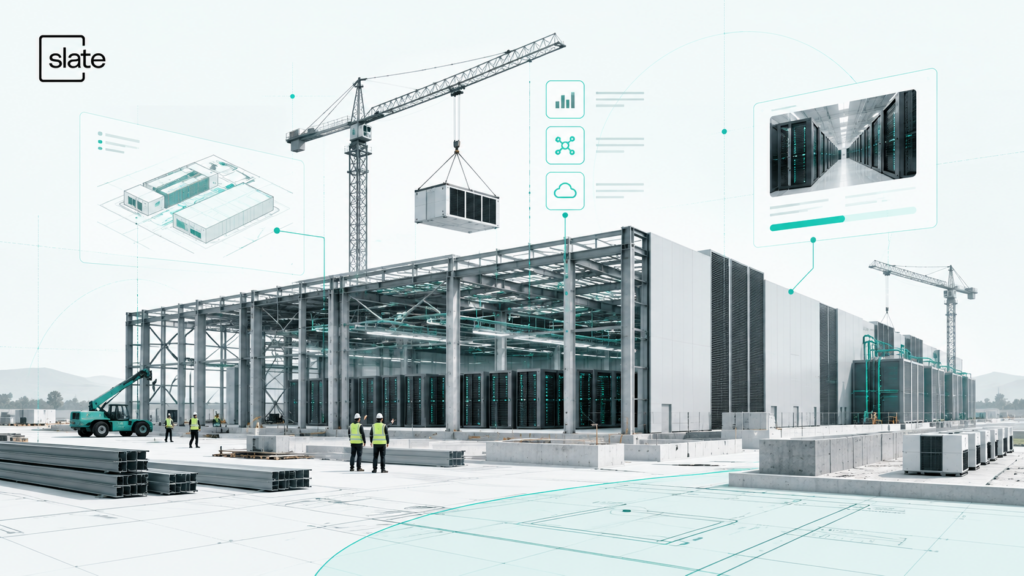
The next step for data center delivery is not simply connecting more project data. It is creating a continuous feedback loop between design, construction, and project performance so what teams learn can actively improve what they do next.
Design decisions create project outcomes, and those outcomes generate valuable information about risk, coordination, cost, schedule, and performance. When intelligence is carried back into future designs, standards, and workflows, each project has the potential to sharpen the next.
For data center organizations scaling repeatable programs, this creates a powerful cycle: design becomes more informed by real project performance, risks can be addressed earlier, and lessons learned become part of how future projects are delivered rather than knowledge buried when a project closes.
The goal is not simply another source of construction data. It is a way to make the information organizations already generate more useful throughout the delivery lifecycle.
Building the next generation of data centers
The pressure to deliver data center capacity faster is unlikely to disappear. But speed alone won’t be enough. The organizations that pull ahead won’t simply build faster; they’ll build delivery systems that get smarter with every project.
See how connected intelligence supports data center delivery
From early design through active construction, Slate helps data center teams connect design automation, real-time progress, and project intelligence across the delivery lifecycle.
Want to explore what this could look like across your data center program? Talk to our team!
Sources
- McKinsey Global Institute. Colocation Data Centers: The Infrastructure Race Behind AI, June 30, 2026.